Communication Strategies
Selected projects exploring how communication strategy, brand positioning, and messaging systems influence the customer experience.
Brand Positioning & Messaging System
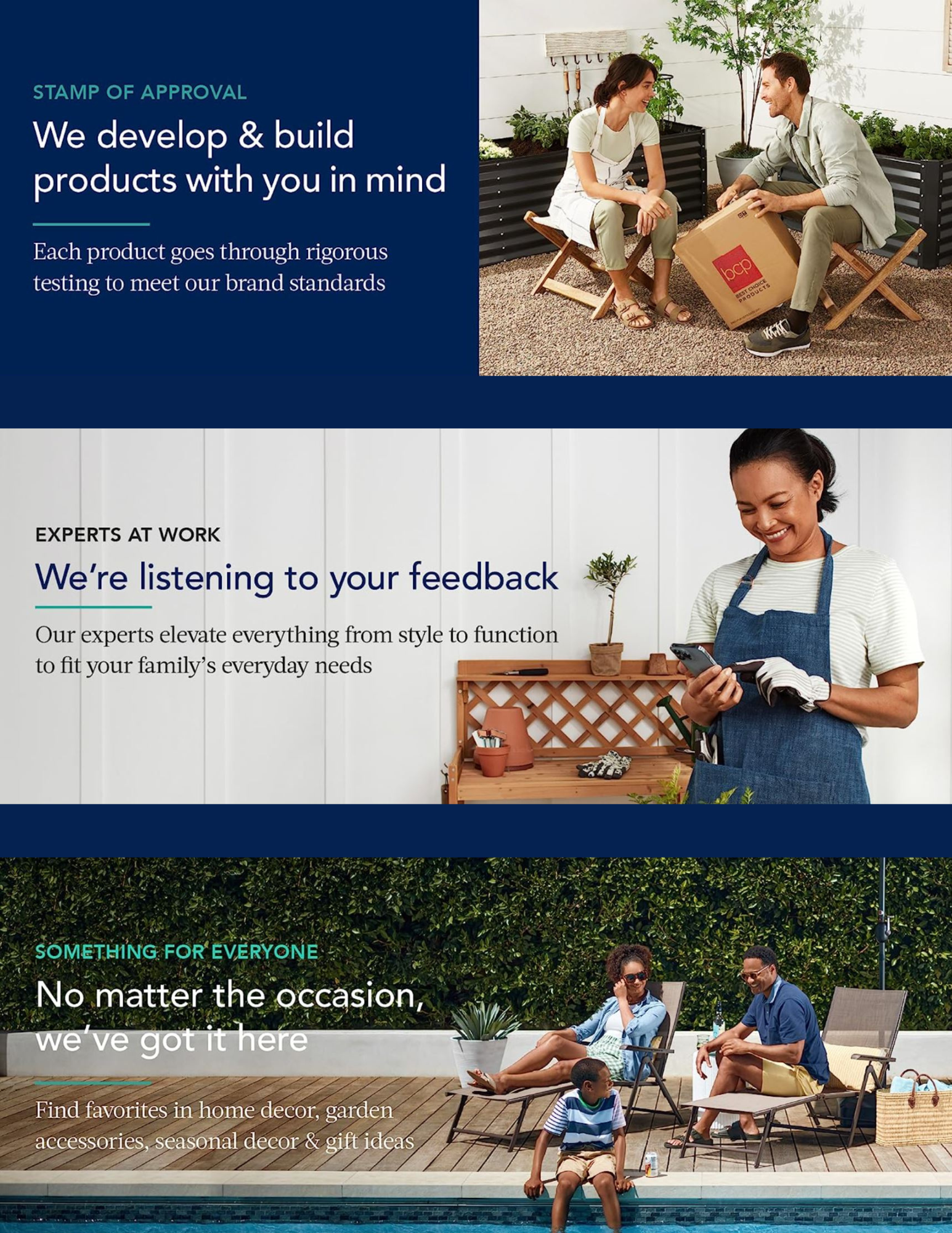
Business Goal: Redefine a home retailer’s brand positioning to better reflect changing customer expectations.
The Challenge: The organization recognized that its existing brand positioning no longer reflected the evolving needs and expectations of its target customer. The challenge was to establish a clearer messaging foundation that could guide consistent communication across customer touchpoints while supporting the brand's long-term direction.
Key Insight: Consistency isn't achieved through better copy—it's achieved through a shared communication system.
My Approach: Before developing the messaging system, I evaluated how the existing brand positioning aligned with customer expectations and the organization's long-term goals. Rather than simply updating copy, I focused on creating a messaging system that could provide consistency across multiple customer touchpoints while supporting the broader repositioning effort.
Deliverables
Brand Book | Messaging Framework | Site Copy | Brand Story | Homepage Messaging
Reflection
This project reinforced one of the beliefs that continues to guide my work today: effective messaging begins with clear organizational direction. While copy can communicate a brand, it cannot define one. The strongest communication systems are built on a shared understanding of who the organization is, who it serves, and how it wants to be experienced across every customer touchpoint.
Reframing Product Storytelling
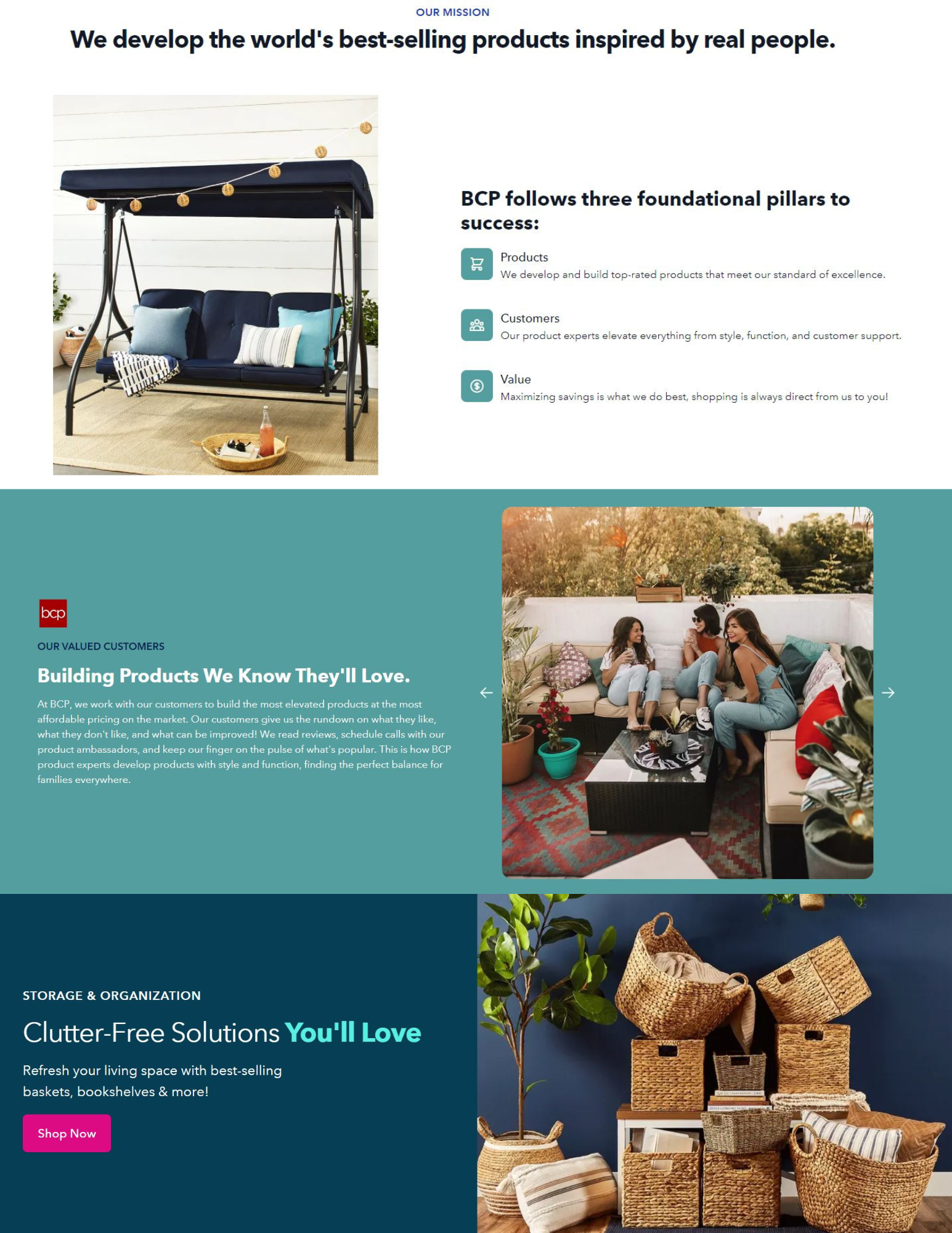
Business Goal: Transform product content from feature-focused descriptions into customer-oriented storytelling while improving organic discoverability through an intentional content strategy.
The Challenge: The organization’s existing product descriptions primarily communicated features and specs, leaving an opportunity to better connect products with actual customer experiences. Simultaneously, blog content lacked consistent publishing cadence or structured SEO strategy, which limited organic traffic and brand visibility.
Key Insight: Products become more meaningful when communication focuses on moments created, not features provided.
My Approach: Rather than positioning furniture as standalone products, I shifted the communication toward the experiences they help create—family gatherings, quiet mornings, celebrations, and everyday moments at home. Alongside this messaging evolution, I incorporated SEO research and AI-assisted keyword analysis to identify customer search intent, develop more relevant content themes, and establish a consistent publishing cadence that supported long-term organic growth.
Deliverables
Product Description Strategy | SEO Content Strategy | Editorial Calendar | Blog Articles
Reflection
This project reinforced that meaningful communication requires both empathy and intention. While SEO helps customers find content, storytelling gives them a reason to stay engaged. I came away believing that the strongest content strategies don't force a choice between business goals and human connection—they achieve both by understanding what customers truly value.

Campaign Communication Alignment
Business Goal: Create a unified customer communication strategy that delivered a consistent brand message across email, paid media, and social channels regardless of individual channel objectives.
The Challenge: Marketing initiatives were planned and executed independently across teams, resulting in inconsistent messaging, disconnected customer experiences, and competing campaign priorities. While each channel pursued its own performance goals, customers encountered different interpretations of the brand.
Key Insight: Channel performance means little if customers experience a different brand every time they interact with it.
My Approach: Rather than treating email, paid media, and social as separate initiatives, I facilitated cross-functional collaboration between stakeholders to establish a shared communication process. Together, we aligned campaign priorities, messaging, and execution timelines so that every customer touchpoint reinforced a single brand story while still supporting each channel's unique business objectives.
Deliverables
Cross-Channel Messaging Strategy | Campaign Communication Framework | Email Marketing | Paid Media Messaging | Social Media Campaigns
Reflection
This experience reinforced one of the beliefs that continues to guide my work today: customers don't experience organizations one department at a time—they experience one brand. The most effective communication isn't created when every team optimizes its own channel. It's created when teams align around a shared story and work together to deliver it. In the end, we stopped creating three separate marketing campaigns and started creating one cohesive customer experience.
Impact
Established a shared communication process across marketing channels.
Improved collaboration between cross-functional stakeholders.
Created a unified customer experience across email, paid media, and social campaigns.
Unified Digital Brand Experience
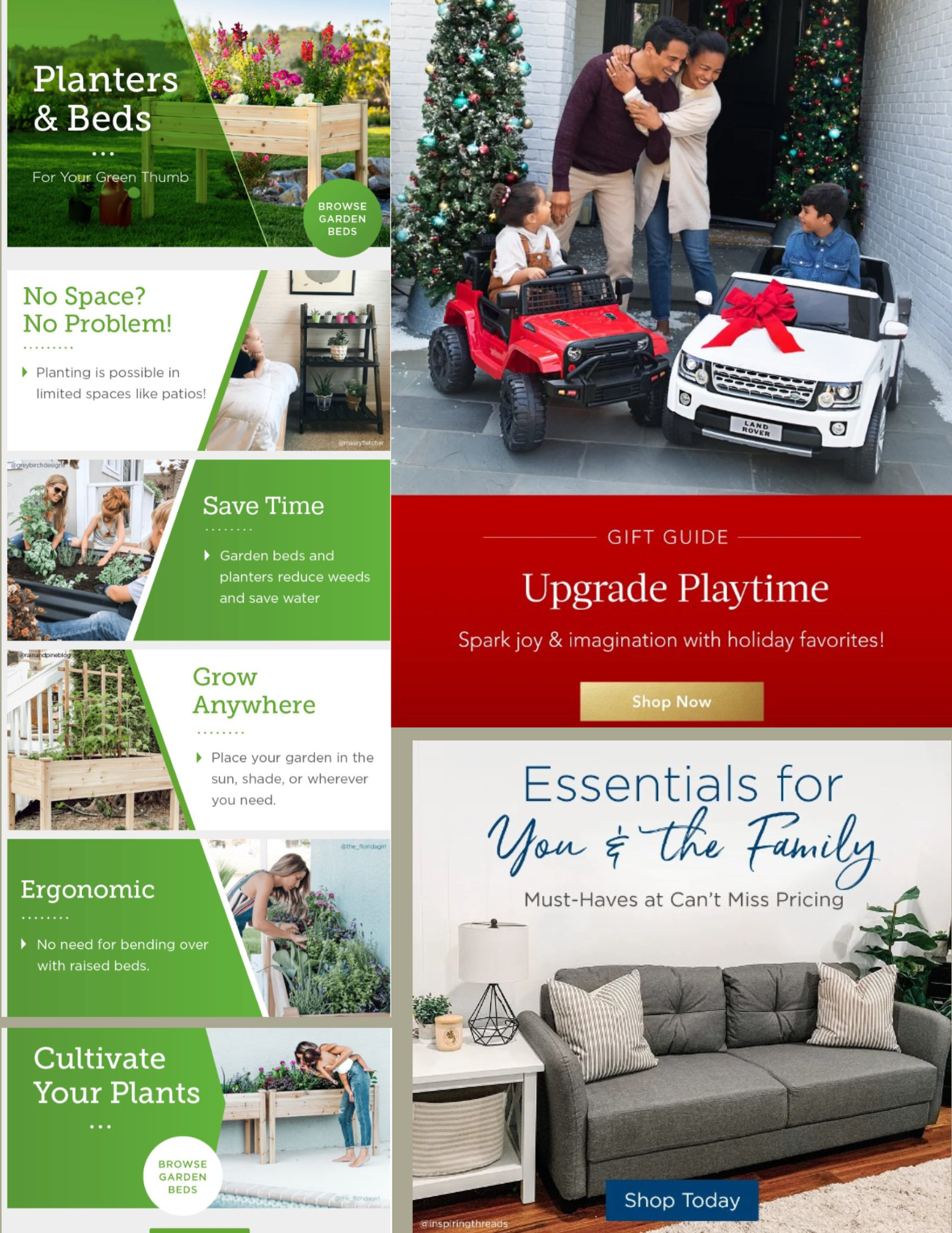
Business Goal: Create a consistent brand experience across the organization’s direct website and Amazon storefront, ensuring customers encountered one cohesive brand regardles of where they chose to shop.
The Challenge: Customers increasingly discovered the brand through both its direct website and Amazon storefront, yet each platform communicated the brand differently. Marketplace restrictions and inconsistent messaging created an opportunity to establish a more unified customer experience while strengthening the brand's presence across channels.
At the time, many of the proposed marketplace enhancements—including Brand Story modules and expanded A+ Content—weren't viewed as business priorities, requiring executive alignment before the initiative could move forward.
Key Insight: Where customers shop shouldn’t determine how they experience the brand.
My Approach: I began by revisiting the organization's brand pillars and core messaging to establish a shared communication foundation that could extend across both digital environments. From there, I developed a unified homepage strategy that could be adapted for Amazon while respecting marketplace limitations, ensuring customers encountered a consistent brand narrative regardless of where they engaged. I also championed the expansion of Amazon content through Brand Story modules and A+ Content, presenting the business case to executive leadership and leading the initiative from concept through implementation.
Deliverables
Unified Homepage Strategy | A+ Content | Amazon Brand Story | Cross-Platform Messaging | Marketplace Brand Guidelines
Impact
Established one cohesive brand experience across channels.
Increased visits to Amazon storefronts and product pages.
Contributed to higher customer engagement through expanded content.
Reflection
This project reinforced my belief that brand consistency isn't created by controlling where customers shop—it's created by ensuring every interaction reflects the same organizational identity. Some of the most valuable initiatives begin by helping others see possibilities they hadn't yet considered.